Quality & certification
Building the quality system behind Olympic hydrofoil production
Formula Kite made its Olympic debut at Paris 2024, and Flying Sardine had to show that every hydrofoil it produced met tight dimensional and functional requirements. We built the quality system behind its equipment certification: measurement based on how each foil is assembled, four precision inspection fixtures and statistically validated measurements, run as routine production inspection.
The challenge
Some critical characteristics were controlled to ±0.5 mm, on large carbon-composite foils. Composite parts move: stresses left by curing make them spring back once they leave the mould or are unclamped, so a foil measured loose does not show the shape it has when assembled. Flying Sardine needed a method every production foil could go through, rigorous enough for independent audits by the International Kiteboarding Association (IKA) and World Sailing.
What we did
- Defined a functional GD&T (geometric dimensioning and tolerancing) strategy: each foil is located and measured on the datums it uses when assembled to the mast and board.
- Designed four CNC-machined inspection fixtures and a traceable workflow, with calibrated gauges, automated calculations and standard reports.
- Validated the measurement system statistically, added visual, weight, centre-of-gravity and stiffness checks, and prepared the evidence for the certification audits.
Approach
1. Measure the foil as it is assembled
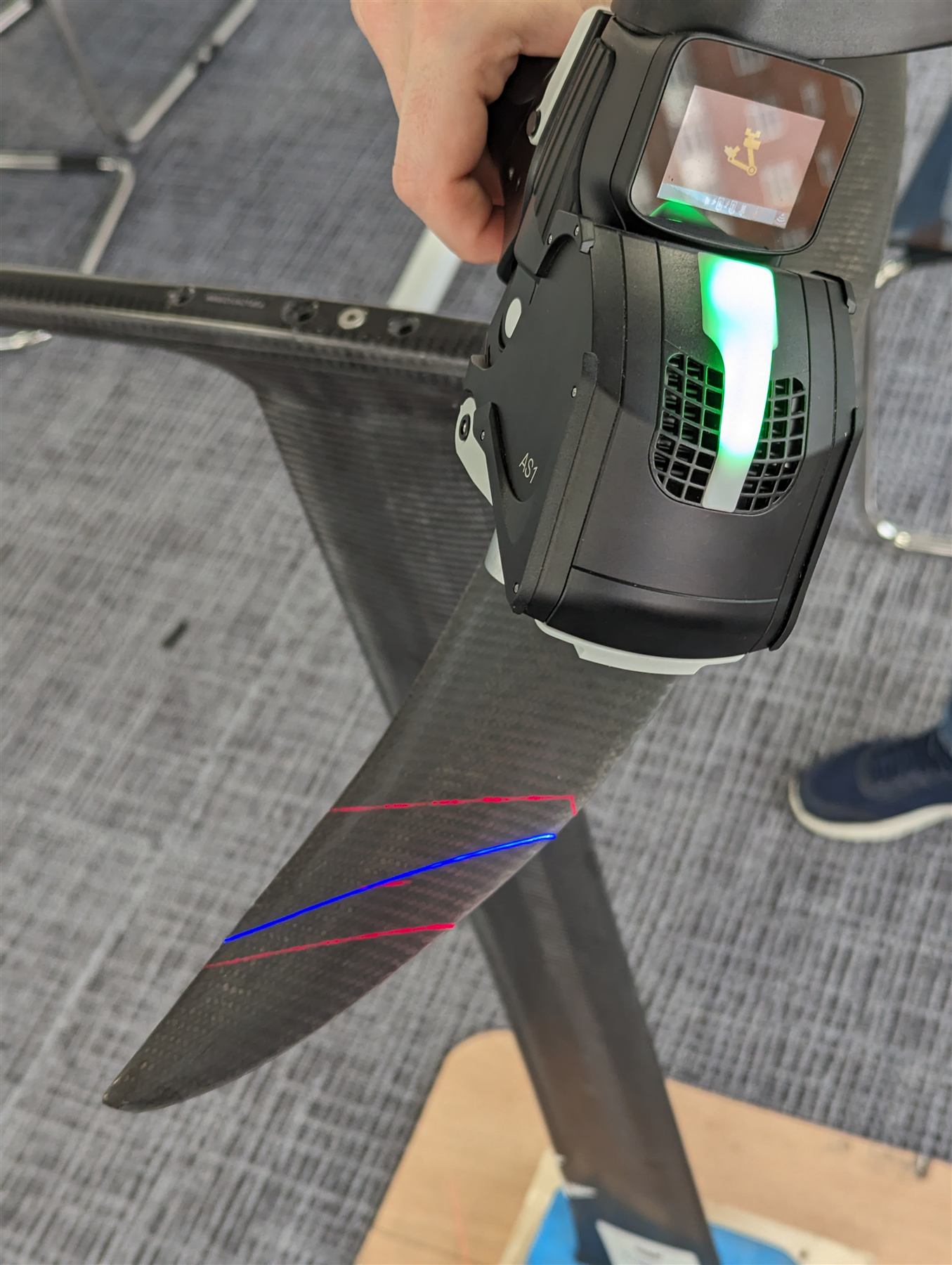
Instead of inspecting each foil in its free state, we located it the way it sits on the mast and board, and measured it there. Measuring the foil as it works, rather than as it comes out of the mould, turned a shape that moves once unclamped into a repeatable, GD&T-based inspection.
2. Build inspection into production
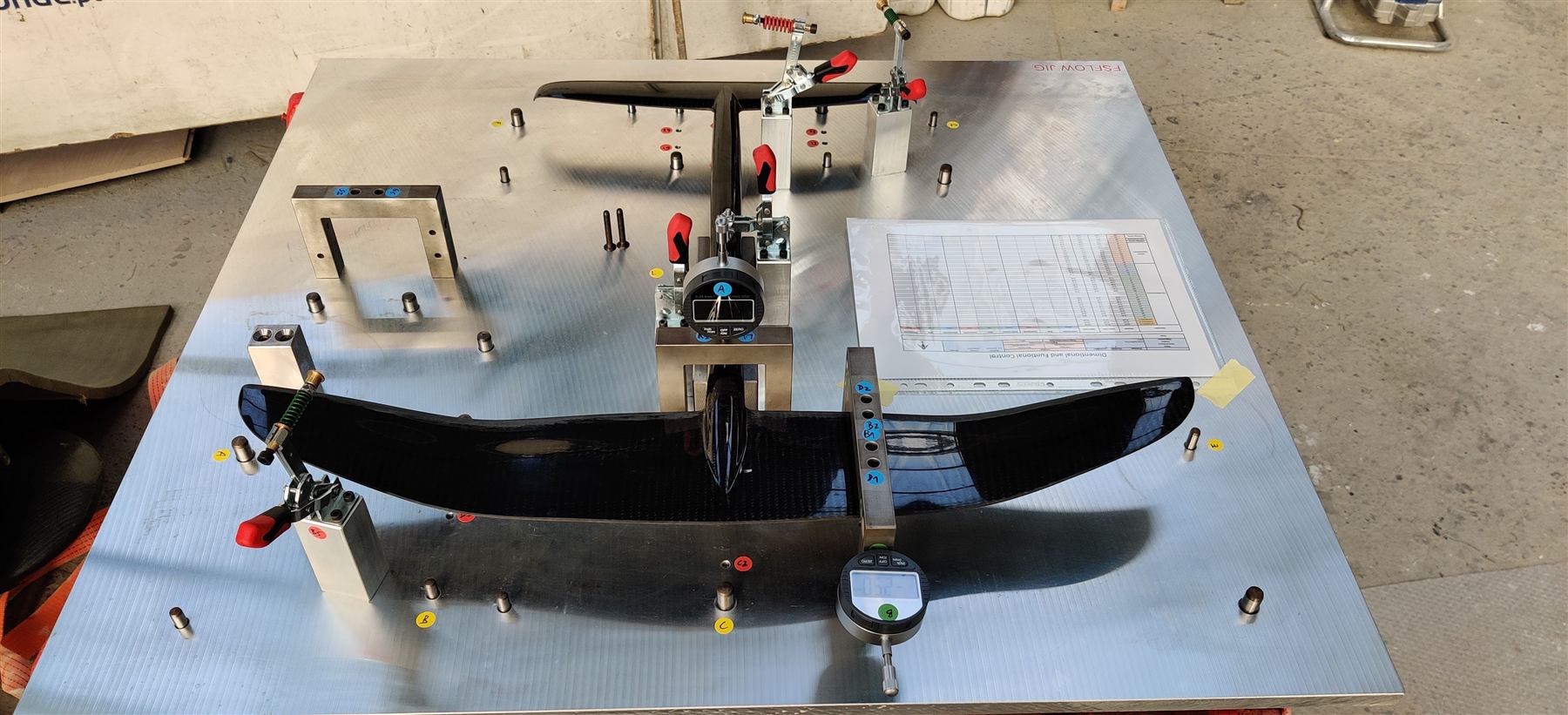
We designed four CNC-machined fixtures, covering two foil families and two mast geometries. With calibrated gauges, automated calculations and standard inspection reports, they form one traceable workflow, from locating the part to recording its result, built for routine inspection of every foil rather than occasional engineering checks. Reference samples for surface defects such as pinholes and porosity (limit sample cards), and checks of weight, centre of gravity and stiffness, complete it.
3. Prove the measurements and support certification
A fixture is only useful if its readings can be trusted. We showed statistically that the gauges were accurate and repeatable, that results did not depend on who took them, and how consistently production held its tolerances.
What the capability studies checkCg/Cgk, MSA, Cm/Cmk and Cp/Cpk, in plain words
- Gauge capability (Cg, Cgk)
- Is the gauge itself accurate and repeatable? Repeated readings of a reference part are compared with the tolerance.
- Measurement system analysis (MSA)
- Do the results depend on who measures? This includes operator-to-operator reproducibility.
- Machine and process capability (Cm/Cmk, Cp/Cpk)
- How much of the tolerance the variation uses, and whether it is centred: over a short, controlled run (machine) and over production (process).
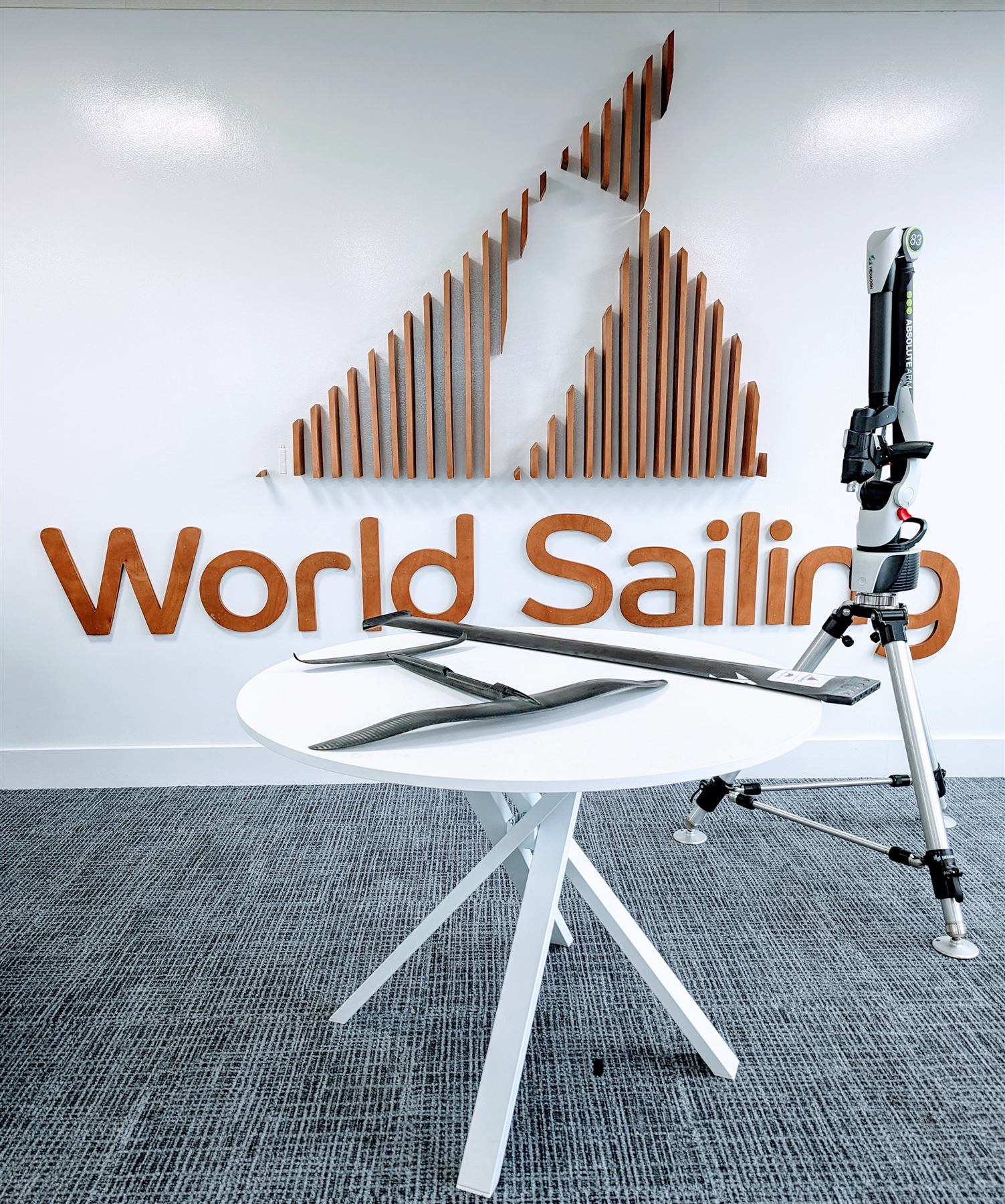
We also prepared the technical documentation and supported the IKA and World Sailing audits. For LA 2028, we went to World Sailing’s London headquarters to align our jig-based method with its new 3D-scanning verification.
Outcome
The framework became the reference quality methodology for Flying Sardine’s production and supported its Paris 2024 Olympic equipment certification. It made traceable inspection of every production foil routine, on parts whose shape is hard to pin down, and provided the evidence for independent review. For LA 2028, our role so far has been registration support and aligning the method with World Sailing’s new 3D-scanning verification.
Facing a similar challenge?
A first conversation takes about 30 minutes and costs nothing.